Some links below are affiliate links — if you buy through them I may earn a commission at no extra cost to you. I only recommend tools I’d actually use.
If you’ve spent any time in a freelancer Facebook group, you’ve watched this exact debate play out a hundred times: someone asks “Dubsado or HoneyBook?” and gets twenty confident, contradictory answers. I get why. Both platforms promise the same thing — one home for your leads, contracts, invoices, and client communication — but they get there in very different ways, and the “right” answer genuinely depends on how you work, not just which logo you like better.
I’ve run client work through both systems, migrated a business off one and onto the other, and rebuilt workflows from scratch more times than I’d like to admit. This isn’t a marketing comparison lifted from each company’s own website — it’s what actually happens when you’re three months into onboarding your fifteenth client and the automation either saves you an hour or breaks in a way that makes you want to throw your laptop.
Quick Comparison Table
| Dubsado | HoneyBook | |
|---|---|---|
| Starting price | $20/mo or $200/yr (Starter) | $36/mo or $29/mo annual (Starter) |
| Top tier | $40/mo or $400/yr (Premier) | $129/mo or $109/mo annual (Premium) |
| Transaction fees | None from Dubsado itself | ~2.9% + $0.25 per card transaction |
| Best for | Service pros who want deep, custom automation | Service pros who want a polished, guided experience fast |
| Automation depth | Very deep — branching, conditional workflows (Premier tier) | Solid but more templated and linear |
| Regions supported | Works internationally | Primarily US & Canada |
| Learning curve | Steeper — more setup time up front | Gentler — more intuitive out of the box |
| Free trial | Yes (extended trial + discount codes common) | Yes, typically 7 days |
What Is Dubsado?
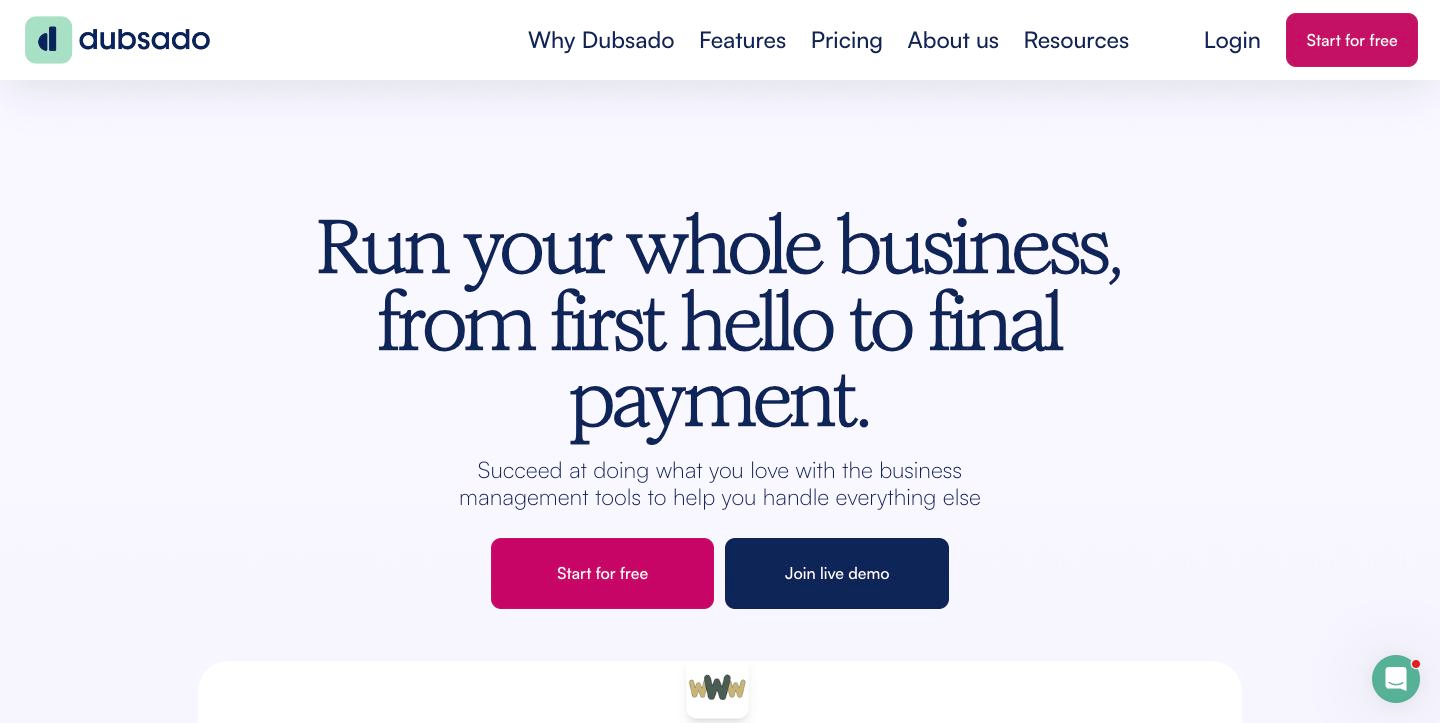
Dubsado is a client relationship management (CRM) platform built specifically for service-based freelancers — photographers, consultants, coaches, designers, virtual assistants, you name it. It bundles lead capture forms, contracts, invoicing, scheduling, and a client portal into one system, and its real claim to fame is its workflow builder: a genuinely powerful automation engine that lets you build branching, if-this-then-that sequences that move a client from inquiry to final invoice without you lifting a finger.
What Is HoneyBook?
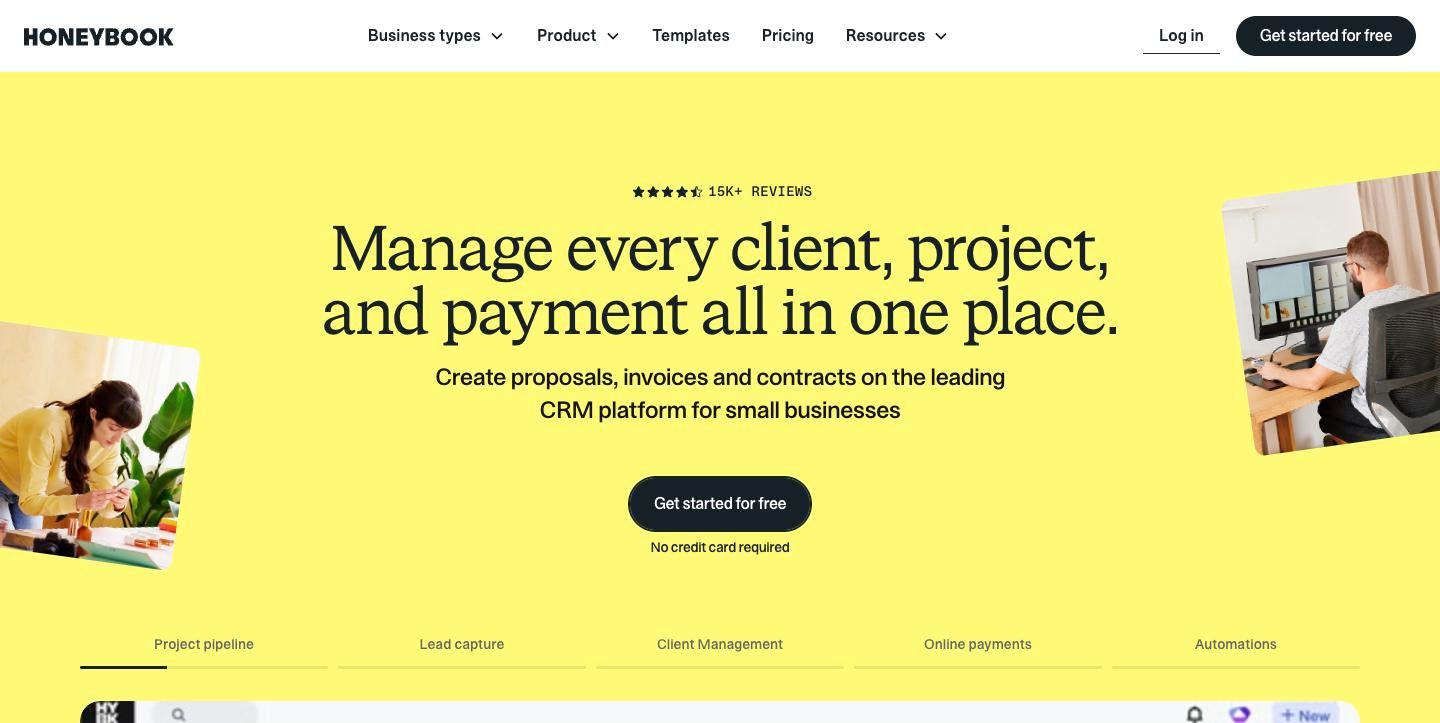
HoneyBook is also a CRM built for independent service providers, and on the surface it does the same core job: forms, contracts, invoicing, payments, scheduling, client portal. Where it differentiates is polish. HoneyBook’s client-facing experience — the proposals, the payment pages, the mobile app — feels more consumer-grade and refined right out of the box, which matters a lot if your clients are less tech-savvy or you want a “wow” factor on the first touchpoint.
Pricing Breakdown
This is where the gap has widened noticeably over the past year, and it’s the single biggest factor I’d weigh if budget matters to you (and for most solopreneurs, it does).
Dubsado Pricing
- Starter — $20/mo or $200/yr. Covers the core CRM: forms, contracts, invoicing, a basic client portal. Some automation and workflow features are limited at this tier.
- Premier — $40/mo or $400/yr. Unlocks the full workflow automation engine, scheduler, public proposals, and the features that make Dubsado’s reputation as an automation powerhouse.
- Add-ons: an additional brand runs about $10/mo, and extra user seats cost more on top of the base plan.
- Some third-party roundups list Dubsado at $35/$55 tiers instead — pricing pages get updated and regional pricing can vary, so treat any number you see as **** before you commit your card.
- Dubsado does not add its own transaction fee on top of your payment processor’s standard rate, which matters more than it sounds like once you’re invoicing several clients a month.
HoneyBook Pricing
- Starter — $36/mo, or roughly $29/mo billed annually.
- Essentials — $59/mo, or roughly $49/mo billed annually.
- Premium — $129/mo, or roughly $109/mo billed annually.
- On top of the subscription, HoneyBook charges payment processing fees of around 2.9% + $0.25 per card transaction — a cost that compounds fast if you’re invoicing five figures a month.
- HoneyBook went through a significant price increase in 2025, and the Starter tier in particular now costs noticeably more than it used to for essentially the same feature set. If you’re comparing against older reviews or YouTube videos, assume the numbers you’re seeing are out of date.
When I ran the math on my own invoicing volume, the combination of HoneyBook’s higher subscription tier plus per-transaction fees added up to meaningfully more per year than Dubsado’s flat subscription — even though Dubsado’s sticker price looks similar at the entry level.
Features Head-to-Head
Workflows & Automation
This is Dubsado’s home turf. Its workflow builder lets you create branching automations — if a lead selects “wedding photography” versus “elopement package,” they can be routed into entirely different email sequences, forms, and contracts, automatically, with conditional logic at nearly every step. It takes real time to learn and build out, but once it’s running, it runs deep.
HoneyBook’s automation is capable and genuinely useful for most standard pipelines (inquiry → proposal → contract → invoice → session prep), but it’s more linear and templated. If your business has a lot of branching client paths — multiple service types, tiered packages, different intake logic — you’ll hit HoneyBook’s ceiling faster than you’d hit Dubsado’s.
Forms & Proposals
Both platforms offer customizable intake forms and lead capture. HoneyBook’s forms and proposals look more polished by default, with smoother design and a more “designed” feel that requires less tweaking. Dubsado’s forms are just as functional but need more manual styling if you want that same premium look — the flexibility is there, but you’re doing more of the design work yourself.
Contracts
Both include legally binding e-signature contracts with templating, so you’re not rebuilding a contract from scratch for every client. Dubsado gives you a bit more control over conditional contract clauses tied to workflow logic; HoneyBook keeps it simpler and faster to set up.
Invoicing
Both support recurring invoices, payment plans, and partial deposits. Dubsado’s invoicing ties tightly into its workflow automation, so payment reminders and follow-ups can be fully automated as part of a larger sequence. HoneyBook’s invoicing is clean and easy for clients to pay, which reduces friction — a real factor if your clients aren’t especially tech-comfortable.
Payments
Here’s the practical difference that affects your bottom line every single month: Dubsado doesn’t tack on its own transaction fee, so you only pay your payment processor’s standard rate. HoneyBook bakes in that ~2.9% + $0.25 fee on card payments, which is competitive with standalone processors but adds up as your revenue scales.
I’ve had clients ask why an invoice total didn’t quite match what I quoted — that’s the processing fee talking, and it’s worth being upfront with clients about who’s absorbing it.
Client Portal
Both offer a branded client portal where clients can view proposals, sign contracts, pay invoices, and check project status in one place. HoneyBook’s portal edges out Dubsado on visual polish and mobile-friendliness. Dubsado’s portal is fully functional and customizable but feels slightly more utilitarian.
Scheduling
Dubsado includes a built-in scheduler at the Premier tier, tightly integrated with workflows so a booked call can automatically trigger the next step in a sequence. HoneyBook’s scheduling is straightforward and easy to set up, syncing cleanly with your calendar without much configuration.
Get the free Freelancer Tool Stack
Ease of Setup and Learning Curve
Be honest with yourself here, because this is where a lot of solopreneurs pick the wrong tool and then abandon it three months later, out $500 in wasted subscription fees.
Dubsado has a real learning curve. The workflow builder is powerful precisely because it’s flexible, and flexible tools take longer to configure. Expect to spend several hours — realistically, a weekend or more — building out your first full workflow, form set, and contract templates. Dubsado does offer done-for-you templates and a certified specialist program if you’d rather pay someone to set it up for you.
HoneyBook is built to get you moving fast. The onboarding is more guided, the templates are more plug-and-play, and most users can have a functional pipeline running within a day. If you want to start invoicing clients this week without a steep setup investment, that ease matters.
Who Each Wins For
Dubsado wins if: you have complex, branching client workflows (multiple service types, tiered offers, different onboarding paths), you’re outside the US or Canada, you want to avoid per-transaction fees, or you’re willing to invest setup time upfront for long-term automation payoff.
HoneyBook wins if: you want a polished, professional client experience with minimal setup time, you’re US/Canada-based, your workflows are relatively straightforward, and you value ease of use over deep customization.
Verdict: Who Should Pick What
Who should pick Dubsado
Freelancers and small agencies with genuinely complex client journeys — think photographers with multiple package tiers, consultants juggling several service lines, or anyone managing international clients where HoneyBook’s US/Canada focus is a dealbreaker. If you’re the type who enjoys building systems (or you’re willing to hire a Dubsado specialist to build it for you once), the automation depth pays for itself within a few months.
Who should pick HoneyBook
Freelancers who want to look professional immediately, without a steep onboarding investment. If your client volume is moderate, your workflows are fairly linear, you’re based in the US or Canada, and you’d rather pay a bit more for a smoother, better-looking client experience out of the box, HoneyBook is the lower-friction choice.
Who should skip both
If you’re a true one-person show with just a handful of clients a year and simple needs — one contract template, occasional invoices — a lighter, cheaper tool (or even a well-organized combination of a free e-signature tool and a simple invoicing app) might serve you better than paying for a full CRM you’ll only use at 20% capacity. Both Dubsado and HoneyBook are built for volume; if you don’t have volume yet, save the money until you do.
Get the free Freelancer Tool Stack
The 18 tools that run a one-person business — invoicing, contracts, time, AI writing, automation and money. One checklist, no fluff.
FAQ
Is Dubsado or HoneyBook better for beginners?
HoneyBook is generally easier to pick up quickly thanks to its guided onboarding and templated approach. Dubsado has more depth but requires more setup time, which can be frustrating if you’re brand new to CRMs and just want to send your first contract today.
Does Dubsado charge transaction fees on payments?
No — Dubsado itself does not charge a per-transaction fee on top of your payment processor’s standard rate, which is a meaningful cost difference from HoneyBook if you process a high volume of client payments.
Can I use HoneyBook outside the US and Canada?
HoneyBook is primarily built for and marketed to US and Canada-based businesses. If you’re located elsewhere or invoice internationally often, Dubsado’s global support makes it the more practical choice.
Which tool has better automation, Dubsado or HoneyBook?
Dubsado’s workflow automation is deeper and more flexible, supporting branching, conditional logic that HoneyBook’s more linear automation doesn’t match. HoneyBook’s automation is still solid for straightforward pipelines, just less customizable.
Did HoneyBook’s prices go up recently?
Yes — HoneyBook implemented a notable price increase in 2025, raising its entry-level Starter plan and other tiers. If you’re comparing against older reviews, the pricing you see may be outdated, so always check current pricing before subscribing ****.
Can I switch from HoneyBook to Dubsado (or vice versa) without losing my client data?
Both platforms allow data export and offer some migration support, though moving fully built-out workflows and templates between systems still takes manual rebuilding. Neither offers a fully automated one-click migration, so budget a few hours to rebuild your core templates if you switch.
Final Thoughts
There’s no universally “better” tool here — there’s a better tool for how you actually run your business. If I had to sum it up in one line: Dubsado rewards the freelancer who wants to build a machine, HoneyBook rewards the freelancer who wants a machine already built. Look at your client volume, your workflow complexity, and your region before you commit to either one — and take advantage of the free trials on both before you decide.